
Our Methodology
Standard Operating Procedure
Real-Time Monitoring
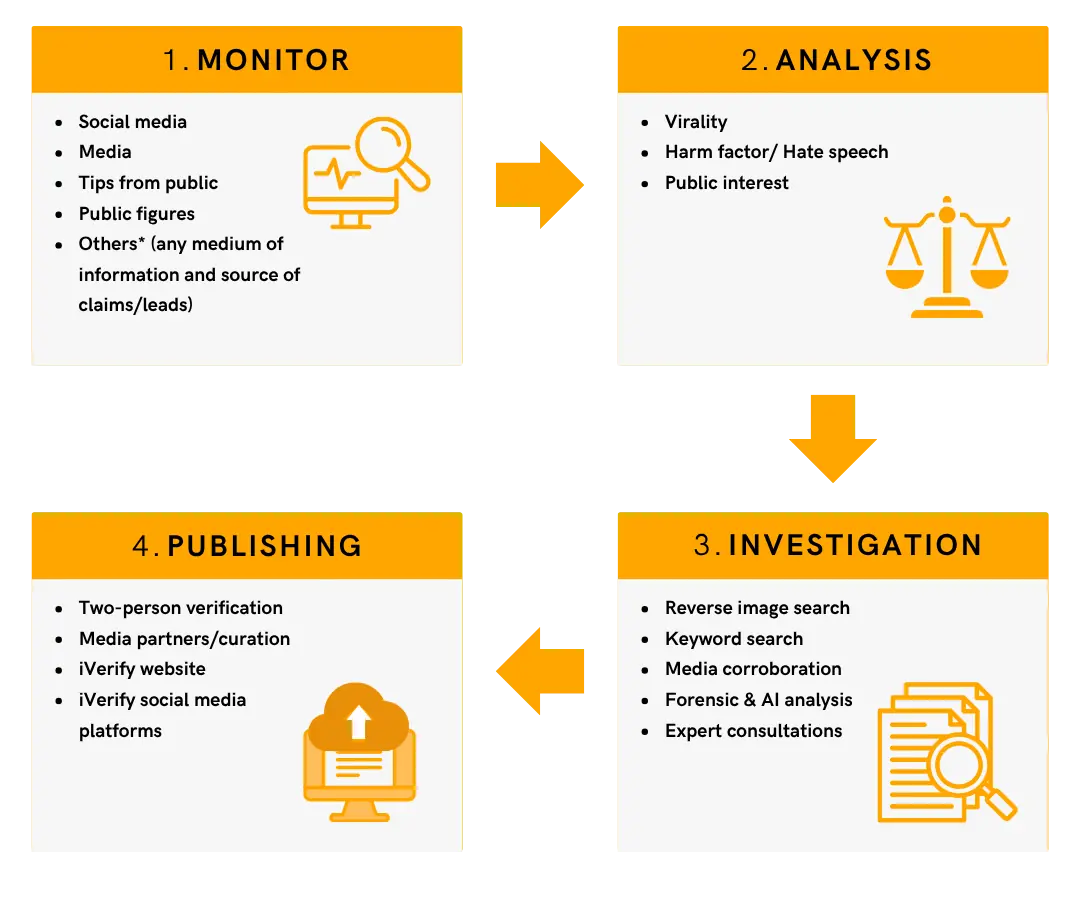
In today’s world, where knowledge is power and timely information is crucial, iVerify monitors claims in real-time using a host of tools and human intervention to provide swift and widespread distribution of fact-checked content. Our goal is to ensure access to accurate information when it matters most.
Claim Selection Policy
We check facts, not opinions. The claim is reviewed to establish whether it is fact-checkable and/or constitutes hate speech, as opposed to the expression of an opinion. The claims/leads found in monitoring are evaluated for either further investigation or are discarded.
Criteria for claims pursued: Virality, public interest, potential harm and relevance to the ongoing news cycle. Some claims, depending on their significance in the context of news, public interest and projection of their circulation based on similar past claims, might be selected for pre-emptive debunking, despite low virality, to mitigate and control the potential damage they might cause.
Criteria for claims discarded: Lack of access to a place, documents or response from authorities; limitation in investigative resources; inconclusive findings to avoid adding to the confusion; evaluation of ‘more harm vs good’ by sharing a piece of unverified information – even in the form of a factcheck – when the claim can pose danger to someone’s life, expose personal details, etc.
Investigation
iVerify uses primary and secondary evidence in almost all factchecks, comprising multiple sources, including the quoted individual, public data, thematic experts, relevant authorities and technical tools (for visuals, audio, geography, archival, etc) to ensure all sides of the story are investigated.
Collaboration with Stakeholders: iVerify collaborates with government officials, media outlets, and other stakeholders to promote a shared commitment to the truth. By working together, we aim to strengthen the overall credibility of the investigation process.
What is the two-step verification? Once a fact-checker has completed their investigation into a claim, another team member, along with the Project Supervisor or Project Lead, reviews their findings to ensure accuracy before publication.
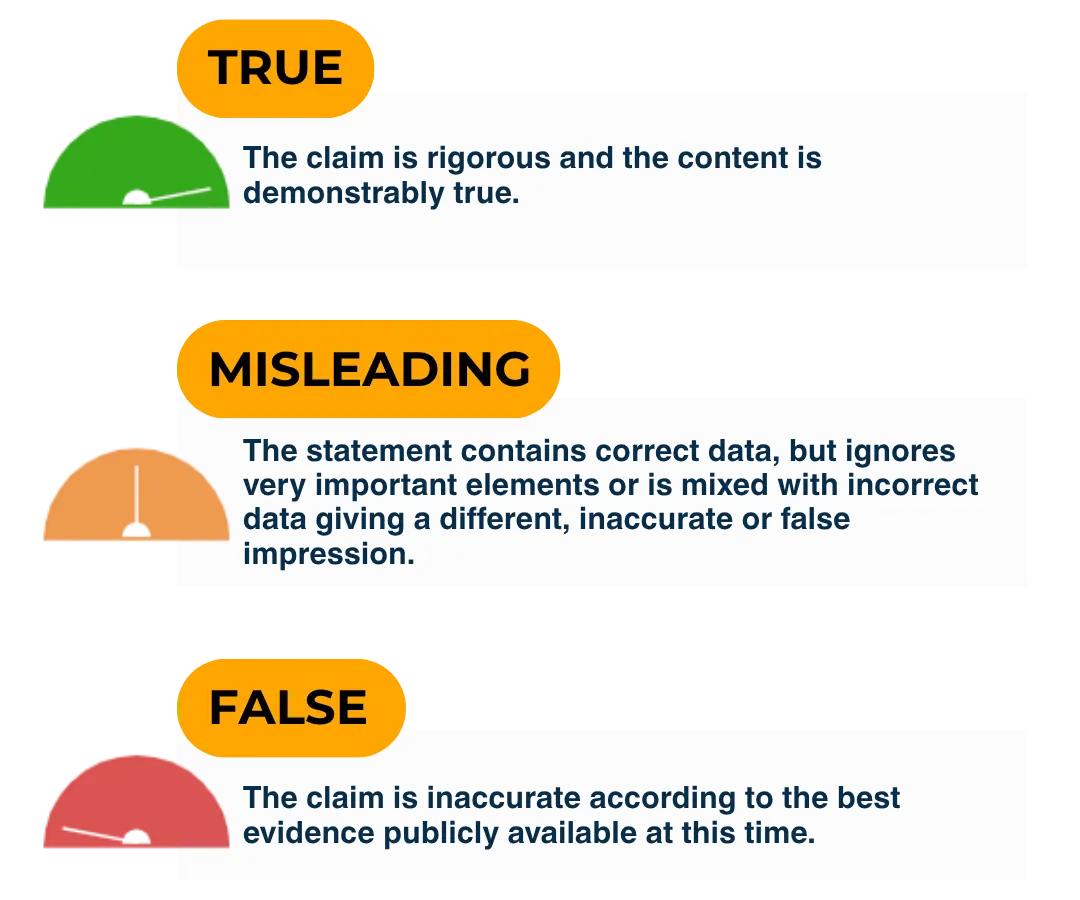
The evidence collected is then compiled to prepare a fact-checking report, which includes the relevant rating, a narrative, and references.
Definitions
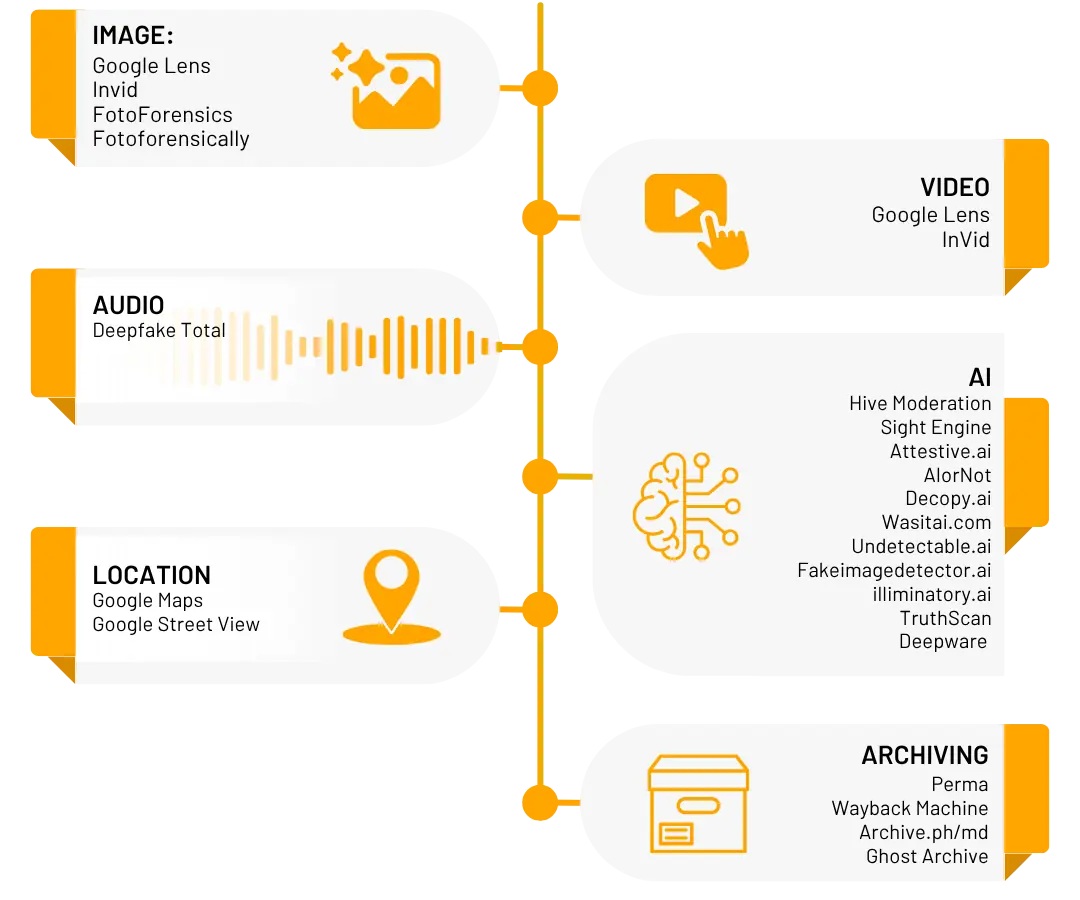
Toolkit
Tools play a key role in iVerify’s fact-checking process but bearing in mind that they can also give false/inconclusive results, the team keeps using different software and relies on more than one to provide as evidence.
For AI-generated content, tools are used as supportive aids that give likely indications about the status of a piece of content, rather than any conclusive results.